Week 1 - introduction and Preparation
In this first week, we learn the importance of setting an intention with spiritual practices and begin to routine to include meditation and mindfulness into your daily life.
In this lesson, you’ll be introduced to the five koshas—the layers of our being—that we’ll explore over the next six weeks. You’ll be guided through a meditation called the Caves of Consciousness, giving you a taste of what to expect in the coming weeks. I’m excited to lead you on this journey into a deeper connection with yourself.
THE PRINCIPAL OF SELF ENQUIRY IN YOGA NIDRA

mm
Week 2: This week will begin to explore the body of matter - Annamaya Kosha - our physical body. This is the aspect of ourselves that we can easily identify with.
We embark on the path of self-discovery by developing a conscious awareness of the physical body. This week, we will start our practice with mindfulness to fully acknowledge the senses of the physical body:
Sight: Notice the colours, shapes, and light around you.
Hearing: Listen to the sounds in your environment, both near and far.
Smell: Be aware of the scents and aromas you encounter.
Touch: Feel the texture and temperature of objects and surfaces.
Taste: Pay attention to the flavours and sensations in your mouth.
Being aware of the physical body and its senses, allows us to become more present and grounded in the moment, laying the foundation for deeper self-exploration.
In this lesson, we will discuss the implications of stress within the body and mind and what we can do to shift this stress.
Lesson Outline:
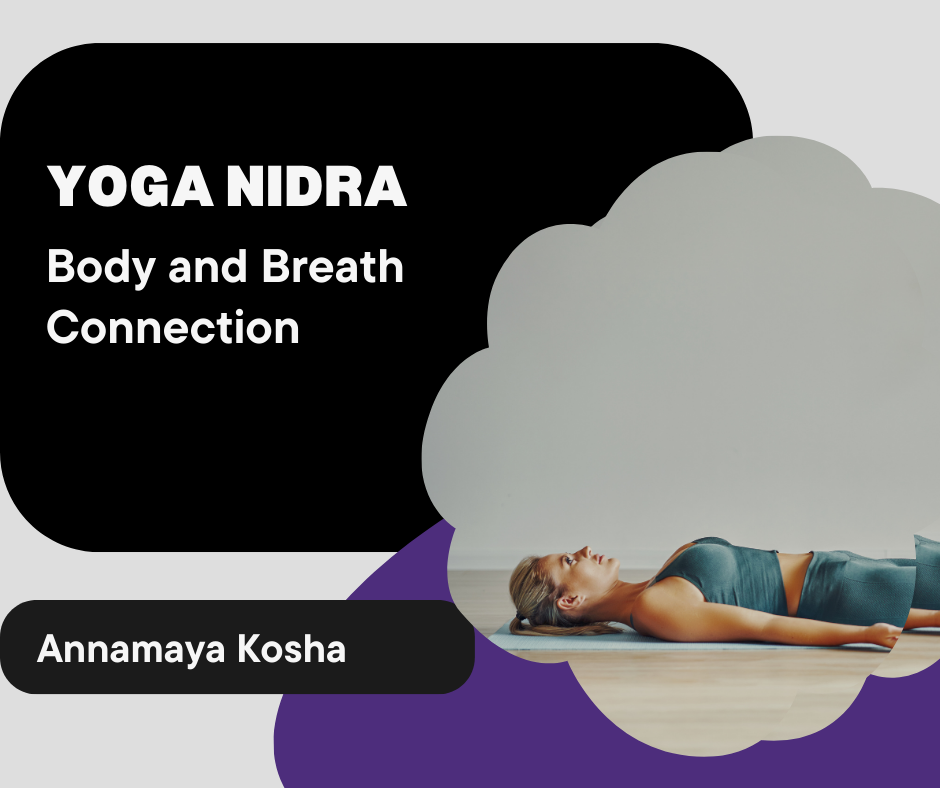
In Yoga Nidra, we refer to the physical body as the Annamaya Kosha, the first of the five koshas, it is the outermost layer of our being. It encompasses all the tangible aspects of our physical form – our flesh, blood, muscles, and bones.
The term "Annamaya" translates to "nourished by food," highlighting the idea that our physical body is sustained and maintained by the food we eat. However, in Yoga Nidra, we recognize that nourishment goes beyond just what we eat. It encompasses various aspects that keep the body healthy.
In this lesson, we'll delve deeper into the symbiotic connection between the body and the breath, understanding how they interact to support overall well-being.
I. Introduction A. Importance of Breath: Discuss the significance of breathing for physical and mental well-being. B. Overview of Lesson: Provide an outline of topics to be covered, including breathing meditation and the body's response to conscious breathing.
II. Understanding Breathing
A. Mechanics of Breathing: Explain the process of inhalation and exhalation.
B. Types of Breathing: Discuss shallow breathing vs. deep breathing and their respective effects on the body.
C. The Vagus Nerve: Introduce the role of the vagus nerve in regulating breathing and promoting relaxation.
III. Benefits of Conscious Breathing A. Stress Reduction: Explore how conscious breathing can alleviate stress and anxiety. B. Improved Focus: Discuss how deep breathing enhances concentration and mental clarity. C. Enhanced Relaxation: Explain the role of conscious breathing in promoting relaxation and restful sleep.
IV. Breathing Meditation A. Guided Practice: Lead a breathing meditation session, focusing on deep, rhythmic breathing. B. Body Awareness: Encourage participants to observe the sensations in their body as they breathe deeply. C. Mindfulness of Breath: Guide participants to anchor their awareness on the sensation of breath as it enters and leaves the body.
V. The Body's Response to Conscious Breathing A. Parasympathetic Activation: Explain how deep breathing activates the parasympathetic nervous system, triggering the relaxation response. B. Physiological Effects: Discuss the impact of conscious breathing on heart rate, blood pressure, and overall well-being. C. Emotional Regulation: Explore how conscious breathing can help regulate emotions and promote emotional resilience.
VI. Integration and Reflection A. Integration Exercise: Invite participants to reflect on their experience with conscious breathing and its effects on their mind and body. B. Practical Tips: Provide practical strategies for incorporating conscious breathing into daily life. C. Closing Remarks: Summarize key takeaways and encourage ongoing practice of conscious breathing for optimal health and wellness.
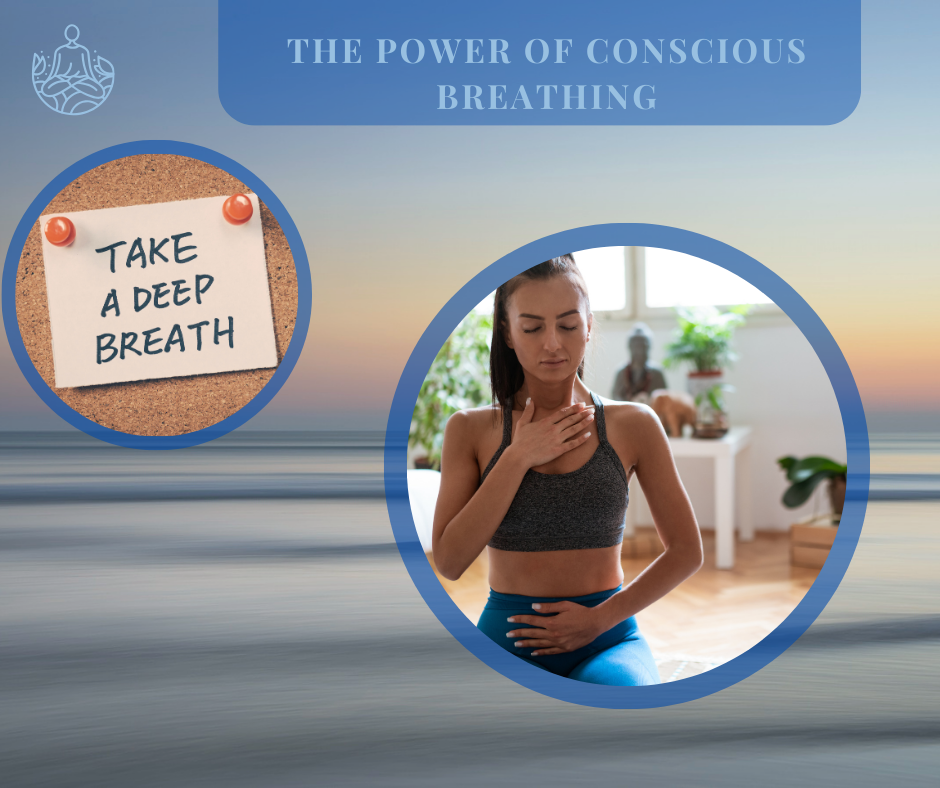
The pranamaya kosha, the second layer of our being in Yoga Nidra, is often called the energy body. Essentially, the life force energy, known as prana, resides within the annamaya kosha, or the physical body. This vital energy operates on both a physical and subtle energetic level, permeating not only our bodies but also the space around us. Because it's connected to our aura, it extends beyond just our physical form.
Even though the pranamaya kosha is more subtle, it's considered to be within the annamaya kosha energetically.
Activating and understanding the pranamaya kosha starts with the breath. Breath acts as a gateway to this energy body. By becoming aware of our breath, we can begin to tap into the potential of this layer of our being. In yoga classes, practitioners are often encouraged to focus on their breath and notice how it affects their bodies during practice. This awareness doesn't stay confined to the yoga mat; it becomes a tool for navigating everyday life.
Additionally, the energy we feel in response to emotions is part of the pranamaya kosha. Learning to identify and regulate these underlying energies—whether they show up in conversations, thoughts, or actions—is crucial for developing this layer. By sharpening our awareness of these energies, we can enhance the positive aspects of our interactions while minimizing the negative ones.
Meditation is a potent practice for activating the pranamaya kosha. As we sit in meditation and observe our breath, we become more attuned to the subtle movements of pranic energy within us. With each breath, we strengthen our connection to this vital life force, allowing it to flow freely throughout our being. Through consistent practice, we can harness the power of the pranamaya kosha to discover inner peace and balance in our lives.
In this lesson, we will be learning how much the breath and the energy are interconnected.
The third layer of our being in Yoga Nidra is called the Manomaya Kosha, often referred to as the Mental Body.
"Manas" means mind, and this kosha represents the mental sheath of the body. It encompasses our feelings, thoughts, emotions, memory, and imagination. Essentially, it's responsible for our cognitive functions such as memory, perception, and reasoning, and serves as the space where we process our experiences and emotions.
Within the Manomaya Kosha, we find our capacity to imagine and dream. It's where our thoughts, feelings, and emotions reside, shaping the meaning we derive from the world around us. This layer is one of the most challenging to transcend because it's where we intensely feel and experience everything.
Similar to our physical body's layers of skin, fat, tissue, muscle, blood, and bones, our mental body also has layers. At its surface are passing thoughts, perceptions, images, and emotions.
Our thoughts and perceptions hold immense power; they can be built or dismantled. Many of us find ourselves oscillating between happiness and suffering, attaching or identifying with every thought, feeling, and emotion. Naturally, the primary goal here is FREEDOM – freedom from being fixated on our thoughts and feelings.
In essence, the journey within the Manomaya Kosha involves cultivating a sense of liberation from the constant sway of our thoughts and emotions, allowing us to experience a deeper level of inner peace and clarity.
The third of the five koshas is manomaya kosha—the mind sheath. Manomaya encompasses the processing of thoughts and emotions. It is the connection point between the lower and upper two sheaths. It involves the functions of the mind that relate to everyday living and our individual interpretation of life. The manomaya kosha can be either useful or detrimental, depending on how we train the mind. Fortunately, the practice of yoga is designed to bring out the higher functions of manomaya kosha.
The mind makes a constant commentary about our experiences as we go about our lives. It is this commentary that can be a major hindrance to the development of the mind. Essentially, our minds create constant judgments and assumptions based on our one-sided perception of our experiences. Fortunately, since our yoga practice allows us to experience these same aspects of our lives from the mat, we can work on the manomaya kosha during practice.
During your practice, your mind will come up with all sorts of thoughts about your practice—your ability, your strength, your balance. You will make assumptions, you will judge, and at times you may be overcome with emotion. Getting caught up the mind’s constant commentary is a sure way to end up frustrated or unhappy.
But it is all part of the process. This is how the mind works. And we can use our yoga nidra practice to develop the higher functions of manomaya so that we can move into the inner, more subtle sheaths without hindrance.
The concentration we place on the breath, and gazing point during yoga all help to train the mind to stay present. Instead of being pulled into the stories we tell ourselves about our experiences, by keeping the attention on the breath, the asana, and the gaze, we become more able to simply notice the commentary as it arises, and to let it fall away as we remain steady. The next time you find yourself getting caught up in the stories you tell yourself, notice that you’ve done so, and bring your attention back to the breath. This constant return of focus to the breath takes work, but eventually is becomes an inherent practice that allows us to be more of a witness to our mind rather than held in the grips of our thoughts.
If you have ever used your breath—specifically, your focus on the breath—to help calm your mind from an overwhelming experience or difficult emotion (on or off the mat), you have felt the two aspects of manomaya kosha. The ability to rise out of thought patterns that do not serve us is perhaps the most valuable aspect of this practice we call yoga. The mind is a powerful force, and we have the ability to train the mind as a way to find ease in life. This is the potential of manomaya kosha.
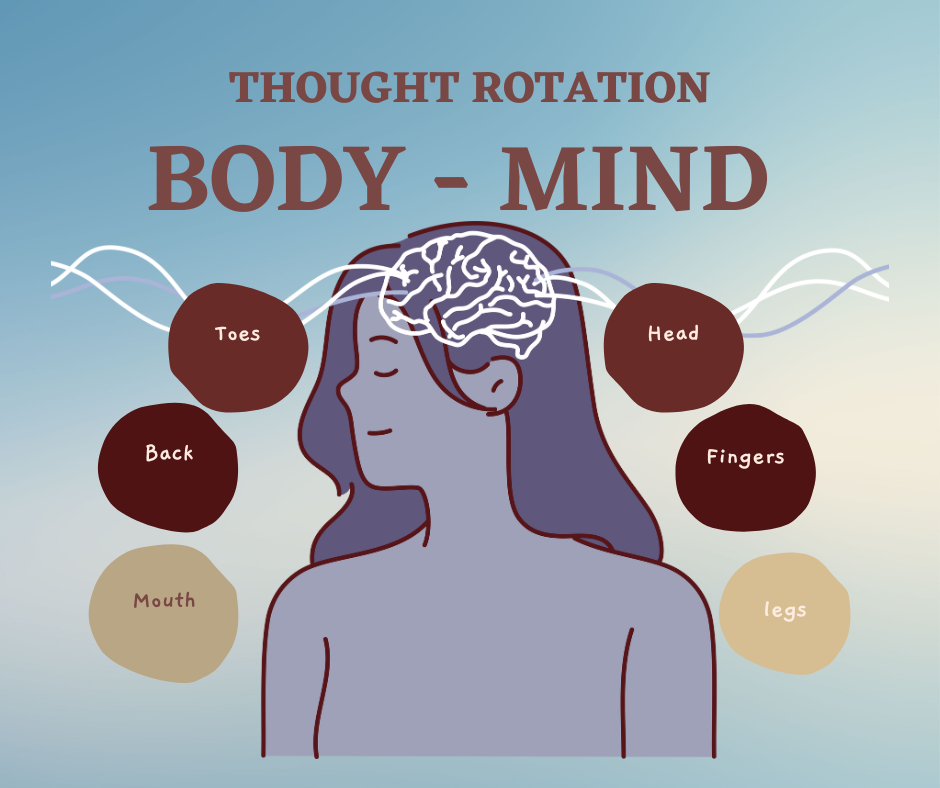
In this lesson we will learn the significance of the rotation of thought and its benefit in Yoga Nidra.
The fourth layer of our being in Yoga Nidra is called the Vijnanamaya Kosha, often referred to as the wisdom sheath. Vijnanamaya encompasses both intuition and intellect. It can be thought of as the observer mind, which is not tangled in our actions or thoughts but instead, acutely aware of them. In simple terms, Vijnanamaya Kosha is pure awareness. It relates to our third eye chakra
When we reach a point in our meditation where we're less distracted by random thoughts and less preoccupied with what comes next, we become more attuned to the present moment. We start to truly feel each pose, noticing the nuances in our body and mind as we settle into them. This heightened awareness is a result of developing the Vijnanamaya Kosha.
Vijnanamaya builds upon the foundation laid by the previous layer, the Manomaya Kosha. Before we can rise above the waves of our busy minds, we must first navigate through them. Through practice, we cultivate a steady mind that allows us to step back and observe ourselves from a distance. This perspective shift gives rise to insight and deeper understanding.
Similar to the Manomaya Kosha, Vijnanamaya can be cultivated through regular yoga nidra practice. As we develop this layer, we experience a deeper sense of peace in our lives, free from thoughts, actions, and speech that no longer serve us. While maintaining this awareness constantly might be challenging, it gradually increases over time, resulting in fewer instances of getting caught up in the daily dramas of the mind.
Within the Vijnanamaya Kosha lies our inner knowing and wisdom, which goes beyond the limitations of the mind. Through practices like āsana, prāṇāyāma, dhāraṇā, and meditation (dhyāna), the mind becomes still, allowing us to listen to the silent messages of life that speak to us through our deepest being.
The final stage of yoga nidra induces mental relaxation. In this lesson we will learn the significance of Visualization in Yoga Nidra
The fifth and final layer of the koshas is known as anandamaya kosha or the bliss sheath. Unlike the previous layers, anandamaya kosha is not something you observe, but rather something you become. It's not just about feeling bliss, but experiencing it deeply. This bliss is not merely fleeting happiness but a profound state of being, regardless of external circumstances.
Anandamaya kosha represents a state of wholeness and integration with the present moment and oneself. It's a layer that encompasses all the others but can only be fully experienced when we peel away the illusions of each preceding sheath. When immersed entirely in our experiences, without separating from them, we touch upon the essence of anandamaya.
Striving to reach anandamaya kosha directly is fruitless because it's not something the mind can control or comprehend fully. It's a state beyond mental contemplation, described best through direct experience rather than words. It's akin to the bliss a child completely absorbed in play feels.
Anandamaya kosha is often considered the deepest and subtlest layer of being, transcending thoughts, emotions, energy, and the physical body. It's a realm of pure joy and inner peace, often associated with sat-chit-ananda or absolute truth-wisdom-bliss.
Developing anandamaya kosha requires consistent inner work and spiritual practices over time. While achieving a state of samadhi, or unity with universal consciousness, may seem elusive, even fleeting moments of bliss can colour our world and awaken feelings of joy and fulfilment.
Congratulations you have worked your way through the process of Yoga Nidra and should now have a deeper understanding of how these meditation practices will assist you in your life.
In this final lesson you will find specifically deigned mediations to further assist you break free from the limitations of the Ego-I and help further integrate all 5 koshas so as to be your authentic multidimensional self in this three dimensional reality of life.
I wish you all the best in your continued journey of self discovery.
Love and light to you always - may your path be always illuminated towards love.
Namaste
Donna 💕